
Menopause support at work is moving firmly up the organisational agenda.
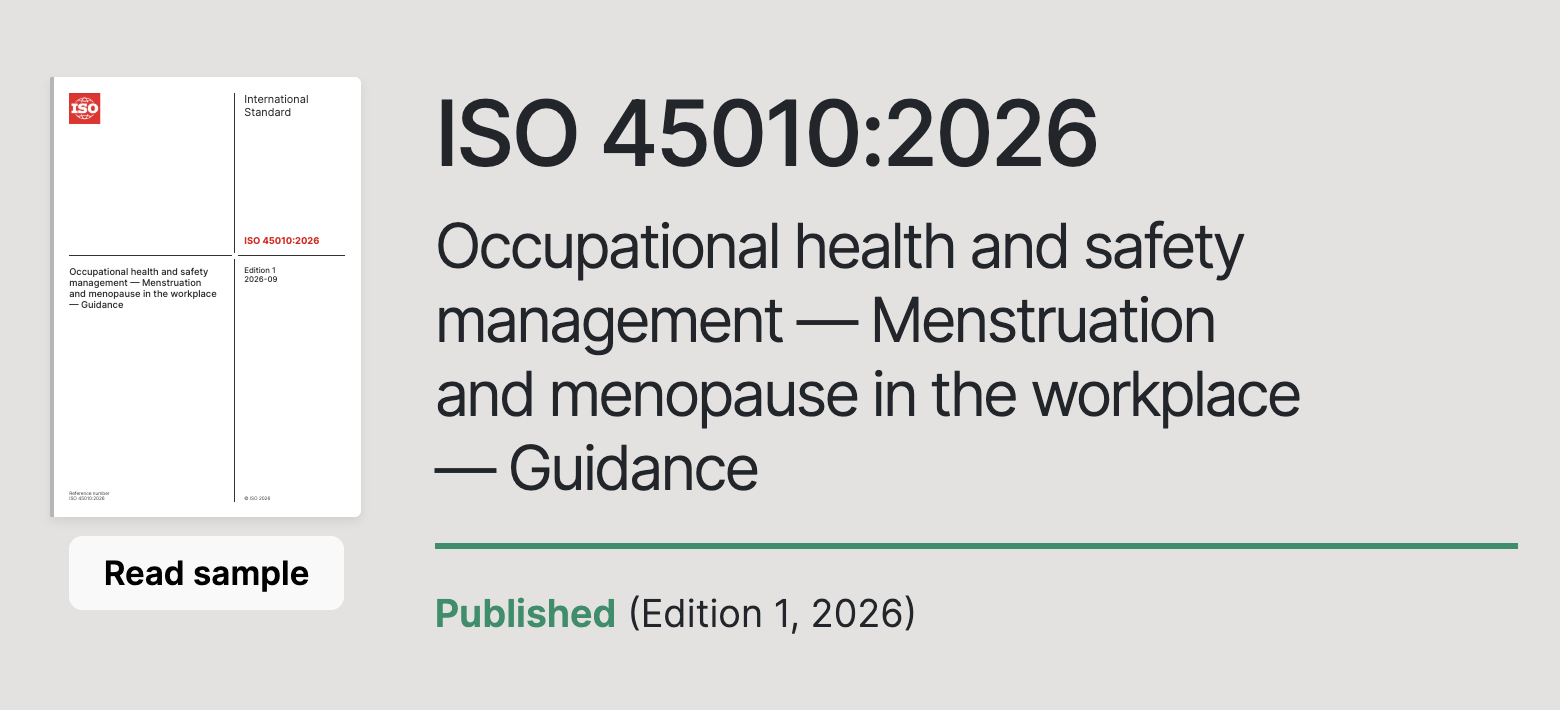
The publication of the new international standard ISO 45010:2026, alongside forthcoming requirements for larger UK employers to publish action plans that include steps to support employees experiencing menopause, reflects a wider shift: from raising awareness to considering what meaningful support looks like in practice.
Policies, workplace adjustments and organisational culture all have an important role to play. But for many employees, their day-to-day experience will also be shaped by how their manager responds when support is needed.
From policy to everyday practice
Menopause can affect people very differently. Symptoms may influence sleep, concentration, confidence, energy, mood or physical comfort, while the impact at work will also depend on the individual, their role and their working environment.
This makes a standard response difficult. A policy can provide an important framework, but managers are often responsible for navigating what that means for an individual in practice.
They don't need to become menopause experts or provide medical advice. They do need enough understanding to listen without making assumptions, have sensitive conversations, explore appropriate adjustments or flexibility, maintain confidentiality and know when to signpost for further support.
The aim isn't for managers to have all the answers. It's for them to feel confident enough to respond appropriately when a conversation arises.
A wider organisational responsibility
Of course, responsibility for menopause support cannot simply be placed on individual managers.
Organisations also need to consider their policies and processes, working conditions, job design, flexibility, workplace culture and access to appropriate support. Managers themselves need clear guidance on what they can offer and where to go for further advice.

This broader approach is reflected in ISO 45010:2026, the new international standard providing guidance on menstruation and menopause in the workplace. Its recommendations encompass workplace culture, policies and procedures, manager awareness and training, workplace design and practical adjustments.
In the UK, organisations with 250 or more employees can also now voluntarily publish action plans setting out how they are addressing their gender pay gap and supporting employees experiencing menopause. Subject to legislation, these plans are expected to become mandatory from spring 2027.
Together, these developments point towards a more practical and integrated approach to menopause support at work.

Building menopause capability in managers
Within that wider approach, training can help managers understand both their role and their boundaries, while developing the practical skills to handle conversations about menopause with greater confidence and sensitivity.
At Work Well Being, our Menopause Training for Managers provides practical guidance on understanding the impact of menopause at work, supporting individual needs and contributing to a more menopause-friendly and inclusive workplace.